How to Choose the Best EV Car for Your Needs?
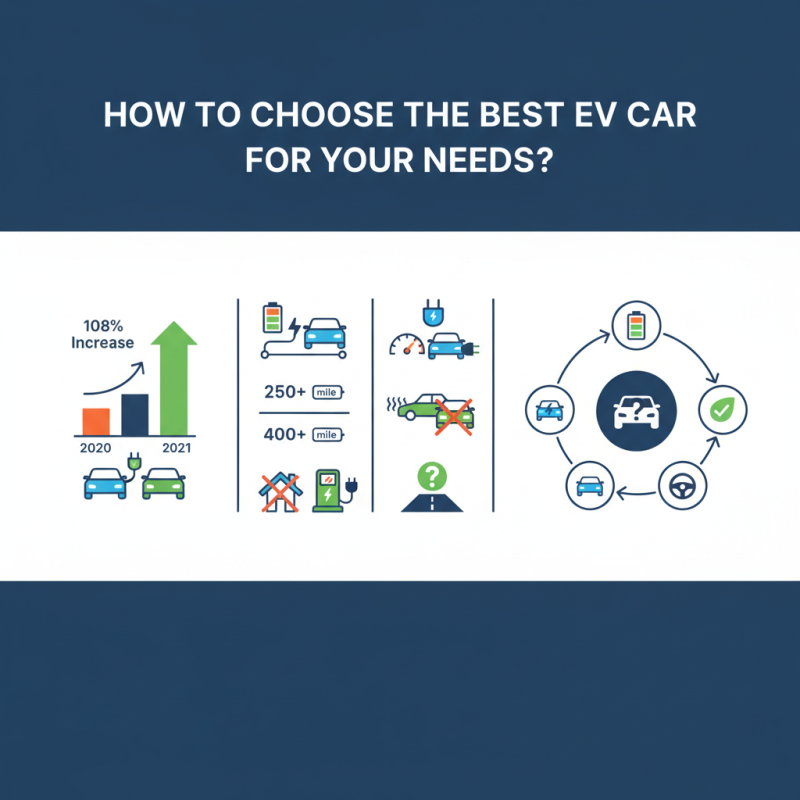
The shift towards electric vehicles (EVs) is reshaping the automotive industry. According to a report by the International Energy Agency, global sales of EVs reached 6.6 million in 2021, a striking 108% increase from 2020. This surge reflects the growing consumer interest in EV cars, driven by environmental concerns and advancements in technology. However, with diverse options available, choosing the right EV car can be challenging.
Modern EV cars come with a range of features that cater to different needs. Battery capacity, range, and charging infrastructure are essential factors to consider. In 2022, the average EV range was over 250 miles, but some models offer more than 400 miles on a single charge. Yet, not all drivers have access to at-home charging. This limitation can greatly impact the decision-making process.
Consumers should also be aware of the trade-offs involved. While some EVs provide top-notch performance, they may lack in interior space or cargo capacity. It’s crucial to evaluate personal driving habits along with potential environmental benefits before committing to a purchase. The process may seem daunting, but thoroughly understanding your needs can lead to a satisfying choice in the long run.
Understanding Your Driving Habits and Needs
When choosing an electric vehicle (EV), understanding your driving habits is key. Do you often take long trips? Or do you mainly drive short distances? Daily commutes can shape your decision, especially regarding range. If your journey is under 40 miles daily, a smaller battery might suffice. But consider rapid charging options for those rare longer drives.
Think about how you charge your vehicle. Home charging setups can be convenient. But what if you live in an apartment? You may need to explore public charging networks. The availability of charging stations can greatly influence your choice. Are they often crowded? Do they fit into your routines? These factors deserve careful consideration.
Reflect on your lifestyle further. Do you often drive with family or friends? A spacious vehicle can be a priority. Or do you prioritize handling and performance? It’s important to assess your priorities. Not every EV may meet your needs, and that's okay. Exploring options and weighing pros and cons is part of the process. The right choice may not be the easiest one.
How to Choose the Best EV Car for Your Needs?
| Category |
Feature |
Considerations |
| Range |
Battery Capacity |
Consider how far you typically drive in a day. |
| Charging |
Charging Speed |
Look for fast charging options if you need quick top-ups. |
| Usage |
Daily Commute |
Assess how an EV fits into your everyday life. |
| Budget |
Price Range |
Set a budget considering total cost of ownership. |
| Features |
Technology Specs |
Decide which tech features are essential for you. |
| Environment |
Sustainability Initiatives |
Check how the car’s footprint aligns with your values. |
Evaluating EV Range and Charging Options
When choosing an electric vehicle (EV), understanding range and charging options is crucial. The range determines how far you can travel on a single charge. Think about your daily commute. Do you usually drive short distances? Or longer trips? Some EVs excel in city driving but may struggle on highways.
Consider your charging habits. How often can you charge at home? Some EVs support fast charging, while others do not. If you live in an area with limited public chargers, this can be a challenge. Longer charging times can lead to frustration during travels.
Tips: Always check the miles per charge. It can vary under different conditions. Explore charging networks available in your area before deciding. Research the types of adapters your EV needs. Not all chargers are the same. Choose wisely. Keep in mind that sometimes, numbers can be deceiving. Real-world range can differ significantly from the specs.
Comparing EV Models and Features
When choosing the right electric vehicle (EV), the comparison of models and features becomes essential. Data indicates that EVs can vary significantly in range, efficiency, and charging speed. Models may offer ranges from 150 to 370 miles on a full charge. Understanding these differences helps in making an informed choice.
Battery capacity is a crucial feature to consider. Most models feature batteries ranging from 40 kWh to over 100 kWh. Larger capacities generally offer better range but also higher costs. A recent survey showed that 45% of potential EV buyers prioritize battery range. However, they often overlook the availability of charging stations. This aspect can impact daily usability more than pure range numbers.
Safety features also warrant attention. Many EVs come equipped with advanced driver-assistance systems. These may include automated braking and lane-keeping assistance. Interestingly, while nearly 70% of buyers consider safety a top priority, many do not thoroughly research safety ratings. It’s essential to compare these ratings, as they can vary across models. Making the best choice sometimes requires digging deeper than surface-level features.
Comparison of EV Models Based on Key Features
Considering Budget and Incentives for EV Purchase
When considering an electric vehicle (EV) purchase, budget and incentives play crucial roles. Many potential buyers focus on the upfront costs. EVs can be more expensive than traditional cars. However, various incentives can significantly reduce these costs. Federal and state rebates often lower the purchase price, making EVs more accessible.
Explore local incentives carefully. Some regions offer tax credits, rebates, and special financing options. Public charging station installations may also be subsidized, which can ease concerns about charging infrastructure. These incentives can sometimes double your savings. However, be aware that these offers can change over time. Research is essential to understand what’s available in your area.
Budget considerations should extend beyond the purchase price. Maintenance and energy costs are also important. Although EVs typically have lower maintenance needs, unexpected issues can arise. Always budget for such contingencies. Charging at home can save money but be mindful of energy rates. Evaluating all these factors can lead to a more informed decision. Balancing expenses and incentives may seem overwhelming, but taking the time to research can pay off in the long run.