What is the Future of Electric Vehicles in Global Markets?
The global market for Electric Vehicles (EVs) is evolving rapidly. Industry experts predict a significant shift toward sustainable transportation solutions. According to Dr. Sarah Mitchell, a renowned EV analyst, "The future of Electric Vehicles will depend on innovation and accessibility." This statement reflects a growing consensus about the need for advancements in technology and infrastructure.
Current trends suggest increased investment in battery technology and charging networks. Companies are racing to create efficient solutions that appeal to a broader audience. However, challenges remain. High production costs and limited charging options can hinder market expansion. Consumer adoption is also influenced by awareness and perceived value.
As we look ahead, it's essential to consider both the opportunities and obstacles. The path forward for Electric Vehicles is not just about technology. It involves a commitment to sustainability and consumer education. Navigating this landscape will require collaboration between manufacturers, governments, and consumers. Failure to address these factors may slow the transition to electric mobility.
Current Electric Vehicle Market Trends and Sales Data
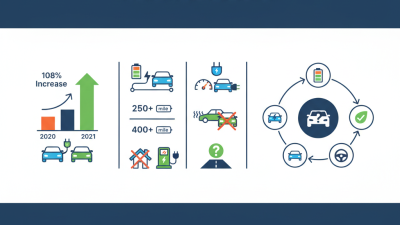
The electric vehicle (EV) market continues to evolve rapidly, driven by increasing consumer demand and environmental concerns. According to a 2023 report from the International Energy Agency (IEA), global electric car sales reached 10 million units last year, a significant increase from 6.6 million in 2021. This upward trend indicates that electric vehicles now account for 14% of all new car sales, reflecting a shift in consumer preferences toward cleaner technologies.
However, challenges remain. The supply chain for critical components, like batteries, faces constraints. A report by McKinsey highlights that the production of lithium-ion batteries needs to scale up dramatically to meet future demand. Moreover, charging infrastructure development has not kept pace with EV growth. Many regions still lack adequate facilities, limiting potential buyers. Increased investment in charging networks is crucial for overcoming these barriers.
Market growth is not uniform. Several regions, especially in the Asia-Pacific, lead in adoption rates. In contrast, some markets lag due to high initial costs and insufficient incentives. An accessible EV market will require collaboration among manufacturers, governments, and infrastructure providers. The path forward involves not just technological advancements but also strategic planning to ensure sustainability and accessibility.
Projected Growth of Electric Vehicle Adoption Across Major Regions
The global electric vehicle (EV) market is witnessing a transformative shift. Major regions are showing a growing appetite for EV adoption. In Europe, government policies are propelling significant investments in charging infrastructure. Cities are increasingly becoming green zones, promoting electric mobility. Yet, challenges remain. Urban congestion and charging accessibility can hinder the growth momentum.
In North America, consumer awareness is rising. Tax incentives encourage purchases, driving demand. However, a lack of charging stations poses a threat. Rural areas often lag behind urban centers in EV adoption. Meanwhile, Asia-Pacific is emerging as a powerhouse. Countries are ramping up production capabilities. The market is vibrant, yet unregulated sectors can lead to inconsistencies in quality.
While optimistic projections hint at robust growth, real-world implementation varies. Factors like battery technology, renewable energy sources, and supply chains influence progress. The world is poised for change, but the path is not straightforward. Stakeholders must address these hurdles to fully realize the potential of electric vehicles.
What is the Future of Electric Vehicles in Global Markets? - Projected Growth of Electric Vehicle Adoption Across Major Regions
| Region |
2023 EV Adoption Rate (%) |
Projected Adoption Rate in 2030 (%) |
Estimated EV Sales in 2030 (million units) |
Government Incentives ($ billion) |
| North America |
5% |
22% |
5.5 |
15 |
| Europe |
10% |
25% |
9.0 |
20 |
| Asia-Pacific |
7% |
35% |
15.0 |
25 |
| Latin America |
2% |
10% |
1.2 |
5 |
| Middle East & Africa |
1% |
5% |
0.5 |
2 |
Impact of Government Policies and Incentives on EV Market Development
Government policies play a crucial role in shaping the future of electric vehicles (EVs). Many countries have introduced incentives to encourage EV adoption. These include tax rebates, grants for purchasing EVs, and funding for charging infrastructure. With these measures, consumers are becoming more interested in electric options.
Incentives can drive market growth, but they are not always enough. Some regions still lack charging stations. This leads to range anxiety for potential buyers. Additionally, the effectiveness of policies can vary significantly across different markets. Some nations offer substantial support, while others lag behind.
The challenge of sustainability remains. Governments need to ensure that the shift to EVs does not worsen other environmental issues. The sourcing of materials for batteries and the production process must be considered. It requires ongoing evaluation and adaptation of policies. Continuous monitoring will help achieve a balanced and responsible transition to electric vehicles.
Technological Advancements Driving Innovations in Electric Vehicles
The future of electric vehicles (EVs) is closely tied to rapid technological advancements. Innovations in battery technology play a crucial role. New materials and chemistries are increasing energy density while reducing costs. This means longer driving ranges and shorter charging times. Emerging solid-state batteries promise to revolutionize the market. They are safer, more efficient, and can hold much more energy.
Moreover, advancements in software are enhancing vehicle performance. Smart connectivity allows for real-time updates and improved user experiences. Navigation apps now predict charging needs based on driving habits. Autonomous driving technologies are also evolving, albeit with challenges. Companies must address safety concerns and regulatory hurdles. These issues demand ongoing research and development, even as progress is made.
In addition, infrastructure development is vital. More charging stations are needed to support widespread EV adoption. Urban planning must integrate these facilities seamlessly. While innovations abound, the journey toward a sustainable future is not without obstacles. Balancing technological promises with practical implementation remains a complex task. Market players need to address these gaps to ensure a robust electric vehicle landscape.
Challenges and Barriers Facing the Future of Electric Vehicles
The future of electric vehicles (EVs) holds great promise, but it is not without challenges. One significant barrier is the current charging infrastructure. Many regions lack sufficient charging stations. This can deter potential EV buyers. Without accessible chargers, range anxiety remains a concern. Cities may need to invest in more public charging options to encourage adoption.
Another challenge is the production of batteries. The mining of materials, like lithium and cobalt, has environmental impacts. The methods used can lead to significant ecological damage and community displacement. Sustainable sourcing is crucial. New technologies might reduce dependency on these materials. Research into alternative battery solutions is needed.
Consumer perceptions also play a role. Some people still view EVs as inferior in performance or longevity. Education is necessary to change these misconceptions. Test drives and community outreach could help shift opinions. It is vital to address these barriers to pave the way for a successful transition to electric mobility.